
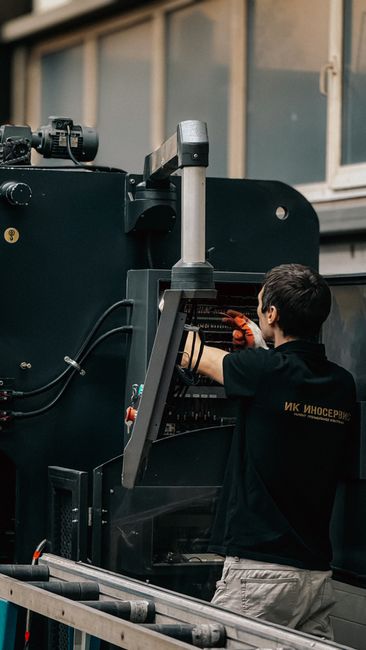
The Myth of the Cash Purchase
You have been told your entire life that debt is a trap. You have been warned to stay out of the red and pay for everything with the cash you have on hand. It is a comforting, safe philosophy that feels responsible. In reality, it is a growth-killer. When you drop fifty, or a hundred, or five hundred thousand dollars on a piece of machinery, you have effectively incinerated your liquidity.
That cash was your shield against market volatility. It was your fuel for unexpected opportunities. By tying it up in steel and silicon, you have rendered yourself vulnerable. The goal of a business isn't to own shiny toys; it is to generate consistent, scalable revenue. If you can move that heavy equipment expense into a predictable monthly operational cost, you keep your cash where it belongs: in your pocket, ready for emergencies or rapid expansion.
The Counterintuitive Secret: Depreciation is Your Best Friend
Conventional wisdom tells us that assets are good and debt is bad. But the most sophisticated business owners understand that holding onto depreciating assets is actually a liability. When you pay cash, you are the one holding the bag when technology shifts or industry standards change.
Financing transfers the risk. By utilizing a strategic financing structure, you ensure that your equipment matches your current operational needs, not your past ones. When the next iteration of your industry’s technology comes along, you aren't stuck trying to sell a massive, obsolete paperweight. You are positioned to upgrade, innovate, and maintain your competitive edge. You aren't buying the metal; you are renting the performance for as long as it is profitable.
Turning Equipment Into a Profit Engine
Ask yourself one question: Does this piece of equipment pay for itself? If the answer is yes, then every day you spend saving up to buy it outright is a day you are actively losing money. This is the opportunity cost that most owners ignore.
If a machine increases your output by twenty percent, but your monthly financing payment is only equivalent to five percent of that new revenue, you are making a fifteen percent spread just for having the foresight to finance. That is not debt; that is arbitrage. It is the art of using other people's money to manufacture your own profit. Stop focusing on the interest rate, and start focusing on the velocity of your capital.
The Action You Must Take Today
I want you to pull your P&L and look at every piece of equipment you’ve purchased with cash over the last three years. Calculate how much cash was tied up in those assets and determine what that money could have done if it had been invested in marketing, talent acquisition, or R&D. Then, reach out to your operations lead. Ask them, 'What one piece of technology would instantly double our production capacity if we had it tomorrow?' Don't ask what you can afford. Ask what will move the needle.
- Identify the equipment that acts as a bottleneck to your growth.
- Project the increased revenue that machine will generate in month one.
- Compare that revenue against a standard financing payment schedule.
- Recognize that if the output exceeds the cost, delay is your greatest enemy.
Your business is not a museum for your assets. It is a laboratory for your ideas. When you stop worrying about 'owning' things and start obsessing over the utility of those things, you unlock a level of agility that your competitors simply cannot replicate. They are too busy counting their pennies; you are busy counting your growth.
At MannaFinancial.net, we believe that an educated borrower is a better borrower — and better borrowers build better businesses.